
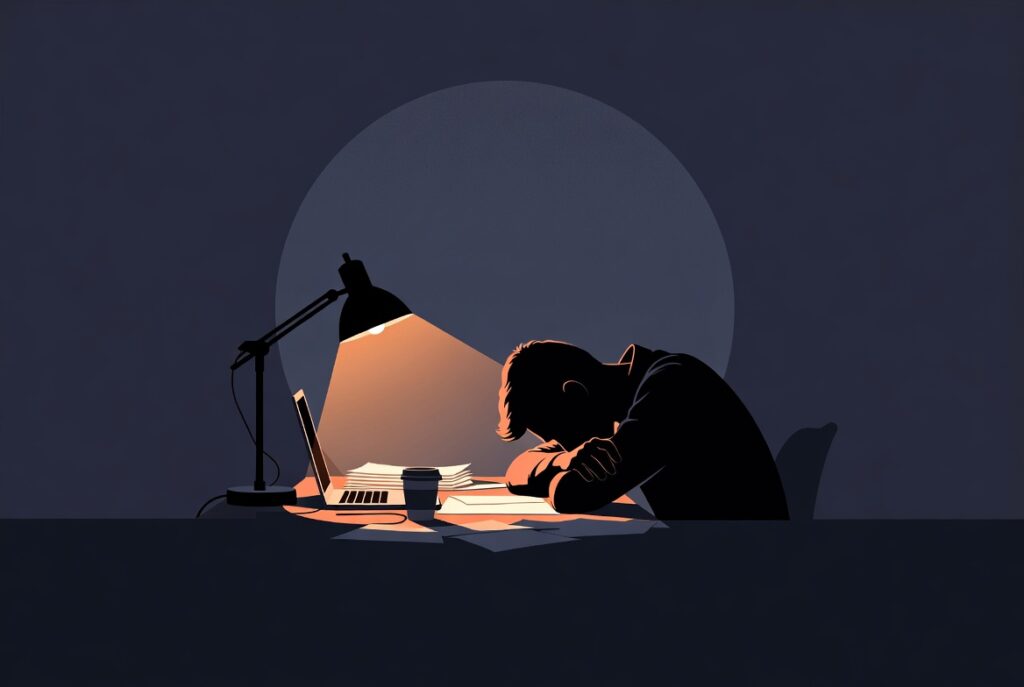
If you’ve been feeling exhausted no matter how much you sleep, and you can’t remember the last time your business actually excited you, you may already be experiencing founder burnout. It’s one of the most common yet least talked-about challenges in entrepreneurship, and catching it early makes all the difference.
In this article, we’ll walk through what founder burnout actually is, the warning signs most people overlook, and practical steps you can take before it quietly derails both your health and your business.
What Is Founder Burnout?
Founder burnout is a state of chronic physical, emotional, and mental exhaustion caused by sustained high-pressure demands of running a business, without enough recovery, support, or boundaries.
It’s not the same as being tired after a hard week. Burnout is what happens when stress becomes the permanent background noise of your life. It builds slowly, often invisibly, until one day you realise you’re running on empty and just going through the motions.
According to a study published in the Journal of Business Venturing, nearly 25% of entrepreneurs report experiencing burnout, with founders of early-stage businesses at the highest risk. The pressure of wearing every hat, sales, operations, HR, finance, combined with financial uncertainty and isolation makes the founder role uniquely vulnerable.
And here’s what makes it tricky: high-performing founders often mistake the early symptoms for a motivation slump or a bad month. By the time it’s obvious, it’s already deep.
Early Warning Signs of Founder Burnout
The early signs of founder burnout are subtle, they show up in your mood, your focus, and your relationship with work long before you hit a wall.
Here are the most common ones to watch for:
1. You’ve Lost the “Why”
The vision that used to get you out of bed feels hollow. You’re still doing the work, but the meaning behind it has faded. This emotional disconnection is one of the clearest early markers of burnout.
2. Everything Feels Urgent and Nothing Gets Done
When burnout starts setting in, decision fatigue kicks in hard. You feel constantly busy but make little real progress. Tasks pile up not because there’s too much to do, but because your cognitive bandwidth is depleted.
3. You’re Irritable, Disproportionately
Small problems feel catastrophic. A missed deadline or a client complaint triggers a reaction that doesn’t match the situation. This emotional reactivity is your nervous system telling you it’s overwhelmed.
4. Physical Symptoms With No Clear Cause
Chronic headaches, disrupted sleep, frequent illness, or a tight chest before Monday morning — the body keeps score. Founders in early burnout often experience these physical signals before they recognise the mental and emotional ones.
5. You’ve Stopped Investing in Yourself
No time to read, learn, or even rest. When a founder stops growing personally, it’s often because they no longer have the energy to look beyond the immediate demands of the business.
6. Isolation Has Become the Default
You’ve pulled away from friends, family, mentors, or peers, not out of preference, but because socialising feels like yet another task. Isolation accelerates burnout significantly.
| Early Sign | What It Looks Like | What It Signals |
|---|---|---|
| Loss of purpose | Going through the motions | Emotional exhaustion |
| Decision fatigue | Procrastination, mental fog | Cognitive depletion |
| Irritability | Overreacting to small things | Overwhelmed nervous system |
| Physical symptoms | Insomnia, headaches, low immunity | Chronic stress response |
| No self-investment | Skipping learning, rest, hobbies | Depleted energy reserves |
| Social withdrawal | Avoiding people, cancelling plans | Deepening isolation |
Psychological and Business Impacts
Left unaddressed, founder burnout doesn’t just affect the founder, it affects every part of the business.
On the Founder
- Increased risk of anxiety and depression
- Impaired judgement and risk assessment
- Loss of creative thinking and strategic clarity
- Physical health deterioration over time
On the Business
- Poor decision-making under chronic stress leads to costly mistakes
- Team culture suffers when leadership is emotionally unavailable
- Customer relationships weaken as communication becomes reactive
- Growth stalls because the founder can no longer think expansively
Research from the American Psychological Association links sustained work-related stress to a measurable decline in executive function, the very skills founders rely on most: planning, problem-solving, and self-regulation.
The business reflects the state of its founder. When you’re running on empty, the organisation feels it too.
Prevention Tips: What You Can Do Now
You don’t need to wait until you’re fully burned out to take action. Small, consistent changes in how you structure your days and where you place your energy can dramatically reduce your risk.
Set Non-Negotiable Recovery Time
Recovery isn’t a reward for finishing your to-do list, it’s a prerequisite for sustainable performance. Block time for rest, movement, and activities that have nothing to do with your business. Protect these like important meetings.
Build Systems, Not Just Habits
A lot of founder burnout comes from being the single point of failure in too many processes. Systematising recurring tasks, delegation, SOPs, automations, frees up your cognitive bandwidth for higher-level thinking. This is something we work on directly with clients at Novamentisco through our Psychological Consulting services.
Get Honest About Your Bandwidth
Founders tend to underestimate the cumulative cost of context-switching. Track where your energy is actually going for one week. You’ll likely find several drains that can be reduced or removed.
Talk to Someone Who Gets It
Coaching, therapy, or working with a consultant who understands the entrepreneurial context isn’t a sign of weakness, it’s a strategic investment. Many of the most resilient founders we’ve worked with describe professional support as the turning point.
Reintroduce Meaning Into Your Days
Reconnect with the original reason you started. Even if the business has evolved, there’s usually a core purpose underneath it. Revisiting that regularly helps prevent the emotional disconnection that leads to burnout.
Quick Prevention Checklist:
- At least one full offline day per week
- Regular check-ins with a mentor, coach, or peer group
- Clear work end-time (even if imperfect)
- At least one task delegated or systematised this month
- Physical movement most days, not for performance, for regulation
Resources and Next Steps
If you recognise several of these signs in yourself, the most important thing is not to dismiss them.
Here are some directions worth exploring:
- Read: The E-Myth Revisited by Michael Gerber, a foundational read on why founders burn out and how to restructure the business around systems rather than heroics.
- Track: Try a simple weekly energy audit, rate your mental, physical, and emotional energy out of 10 at the end of each week. Patterns reveal a lot.
- Talk: Our Psychological Consulting page outlines how we support founders navigating stress, burnout risk, and the mental demands of building a business.
Frequently Asked Questions
What are the first signs of founder burnout? The earliest signs are usually emotional: a loss of motivation, feeling detached from your work, or becoming disproportionately irritable. Physical symptoms like poor sleep and fatigue often follow shortly after.
How is founder burnout different from regular stress? Regular stress is temporary and resolves with rest. Burnout is chronic, it persists even when you take time off, and it affects your ability to feel motivated or connected to work at all.
Can a business survive founder burnout? Yes, but it often requires structural changes, building systems, delegating more, and sometimes bringing in outside support. The business’s resilience is directly tied to the founder’s wellbeing.
How long does it take to recover from founder burnout? Recovery timelines vary widely, but most founders report needing between three to twelve months of active recovery, including lifestyle changes and often professional support, to feel fully like themselves again.
Ready to Build a More Resilient Foundation?
Burnout doesn’t have to be part of your founder story. If you’re feeling the early signs, or simply want to get ahead of them, book a resilience session with our team and let’s talk about what sustainable growth actually looks like for you.
Written for founders, business owners, and entrepreneurs navigating the real cost of building something from scratch. At Novamentisco, we work with small business owners across Armenia and beyond, helping them build businesses that don’t require burning themselves out to grow.